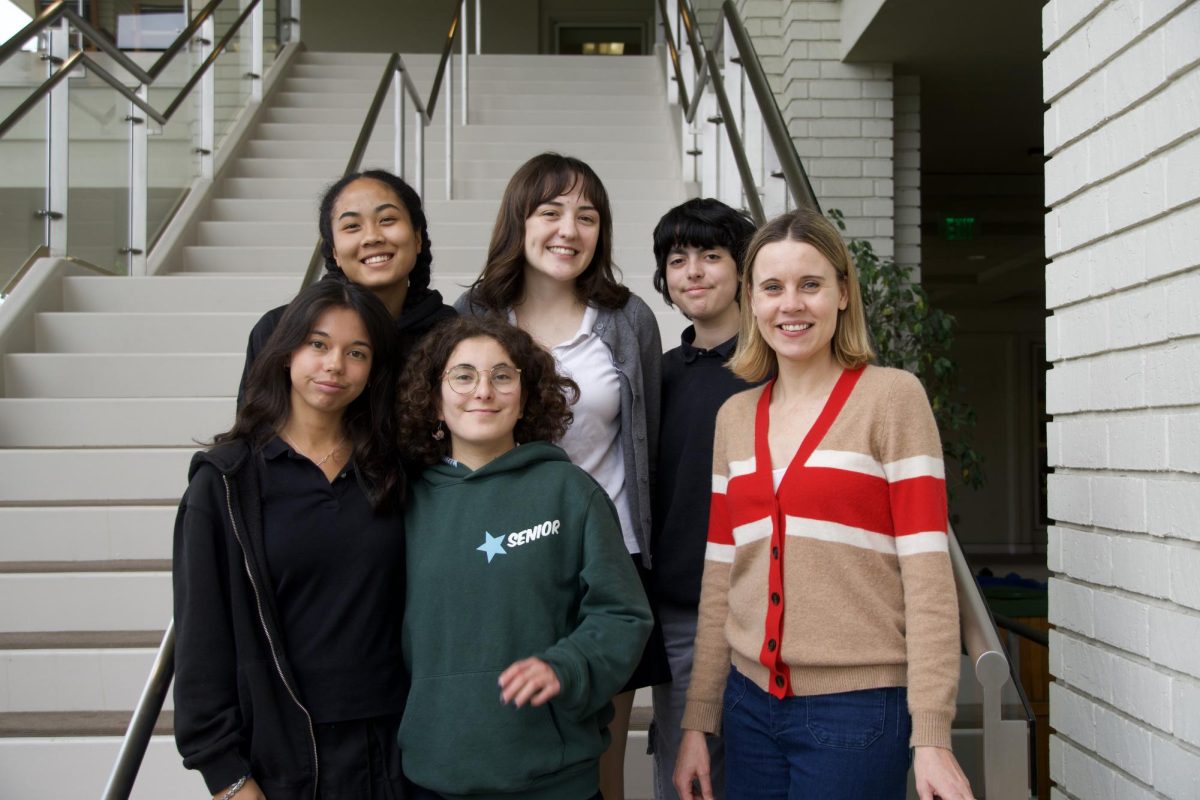
Performing Arts Instructor Sarah Foster launched the first-ever World Theatre elective for the 2025-26 school year in order to challenge traditional narratives of theatre being told from exclusively a white, western male perspective. This elective is part of the Global Futures Institute (GFI) program, but it is offered to all Upper School students. The class focuses on a diverse range of theater and opinions expressed through theater from all over the world. Students have the opportunity to discuss writers, performances and social movements in theater that represent the larger, diverse society.
When creating the World Theatre class, Foster was deeply inspired by an academic course that she taught on British and European theater when she lived in London. Additionally, as a new GFI architect this year, she wanted to design a course that would help GFI scholars and other theater students deepen their understanding and interest in theater. Rhonie ’27, a student in the course, commented on the community aspect of the class.
“We’re a very small and tight-knit group, so we never fail to have hilarious conversations and keep up the energy all class,” Rhonie said.
The World Theatre class not only delves deeply into theater but also into its historical and cultural aspects. Students have the opportunity to learn about different forms of theater in cultures around the world by looking at mask work, reading plays and watching clips. The class includes theatre from ancient Greek plays as well as traditional Asian theater forms such as Noh, Kabuki and Chinese opera. Additionally, students are introduced to theater and its many political and societal influences such as the controversy over the degrees to which different countries fund the arts.
“We examine theater history across the globe from early storytelling all the way up to the social and cultural movements that affect contemporary society today,” Foster said.
A typical day of World Theatre begins with a casual discussion-style lesson focused on a specific aspect of theater in a new place. Later, students are immersed in this new culture through slides and group-led conversations. Finally, students watch clips from relevant productions of various cultures and traditions from around the world. To culminate the class, students will complete a final research project about a specific form of theater that they have not previously discussed, which encourages further exploration into different cultures.
“I love theater and dramaturgy so I was super excited that World Theatre was offered this year,” Rhonie said. “Ms. Foster does an amazing job making what we’re learning about relevant to our day-to-day lives.”
Especially in current society, it can be difficult to learn about theatre from all parts of the world . The class works hard to incorporate all students’ perspectives and backgrounds in order to achieve a well-rounded global perspective on the arts. The World Theatre class offers an engaging outlet to the many different forms of expression that theatre offers.
“[World Theatre] has the ability to carry on the legacy of tradition, help heal historical difficulties, connect communities, entertain and delight audiences and carry social messages and help bring about political change,” Foster said.