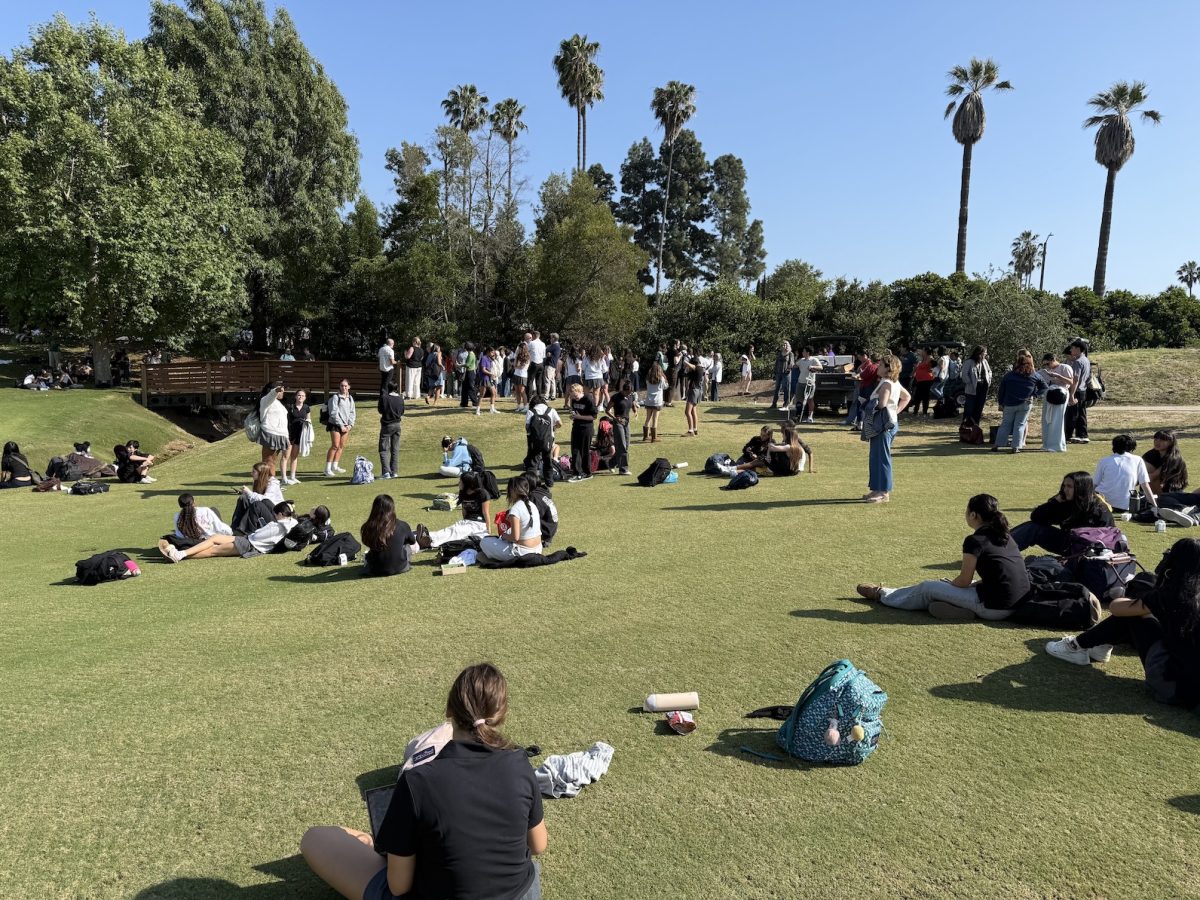
Traditional seaweed soup, lei mak ing and Fa’alavelave are just a few of the unique and memorable cultural traditions of the Asian American, Native Hawaiian and Pacific Islander (AANHPI) communities that Marlborough students have shared.
This year, the Federal Asian Pacific American Council (FAPAC) declared that the 2026 theme of AANHPI Heritage Month in May is “Power in Unity: Strengthening Communities Together.”
This commemorative month is significant in honoring the historical back ground, traditions and invaluable contributions of the AANHPI community to the United States. As a once historically marginalized community, notably through the Chinese Exclusion Act of 1882, systematic discrimination and horrific violence, the AANHPI community memorializes their culture to celebrate but also to combat racial stereotypes.
Members of PATH, Marlborough’s AANHPI affinity group, remarked on what this month means to them.
“PATH has provided a space and community to bond with students across all grade levels through celebrating our diverse cultures and heritages,” Audrey ’28, one of PATH’s leaders, said. “It’s especially meaningful to me because it’s given me a stronger connection to both my Korean and Indian identities, which is something I don’t always get to explore in other spaces at school.”
Throughout the year, the group has created lessons regarding AANHPI heritage and culture for its members. The group also created book lists of various AANHPI authors, like R.F. Kuang, to share the literary works of Chinese American authors.
“It’s been incredibly eye-opening,” said Natalie ’29, a PATH Middle School representative. “We help create les sons where we think how this connects to heritage and help people connect to their own culture.”
She reflects on the thoroughly self-reflective process of using her experience to guide the experiences for middle school ers appreciating their origin.
While the individual cultures all are celebrated during AANHPI Heritage Month, the distinct experiences within each of those communities is equally important. Whether this includes immigrants, those who feel ostracized from their culture because of a language barrier or those who grew up in the country of their heritage with routinely ethnic practices, the AANHPI community includes every person with the Asian American, Native Hawaiian and Pacific Islander heritage.
Within family traditions and dynamics, members of the PATH community also recall the historical traditions impacting them today. For instance, sea weed soup in Korea is traditionally eaten for birthdays, New Year’s and for mothers after giving birth. It originates from the Goryeo Dynasty from 918–1392 CE, signifying deep gratitude and maternal sacrifice as it is rich in iodine and calcium. Reflecting on the historical background of such traditions, especially those rooted routinely in Korean culture like this, for instance, is significant in commemorating these legacies for generations to come.
“Whales eat seaweed after giving birth because it gives them their mater nal strength,” Kim said, reflecting on the historical complexity of this established tradition.